Swarm RoboBee
Collide mid-air, keep flying.
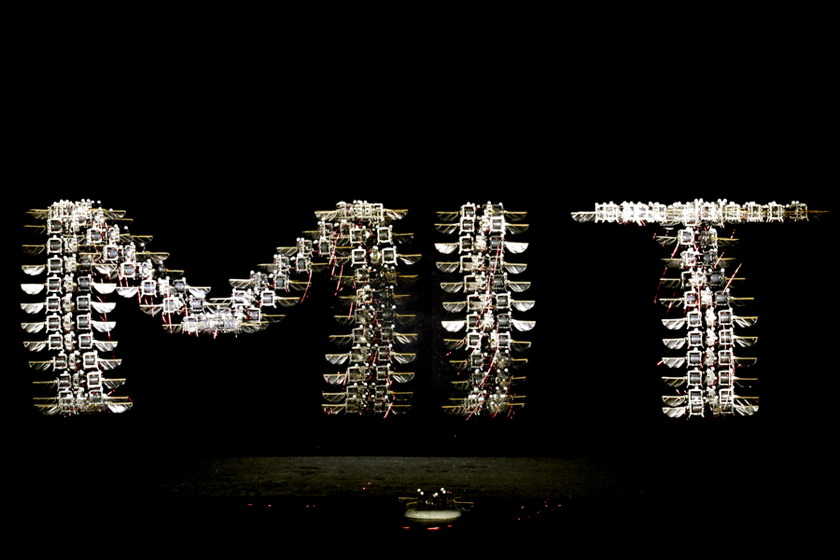
Scaling soft-actuated RoboBee flight from one robot to many. In a dense swarm, contact is unavoidable: here two robots collide mid-air, recover stable hover, and land under closed-loop control.
I am a PhD student in Mechanical Engineering at the Massachusetts Institute of Technology, advised by Prof. Kevin Chen, and collaborating with Prof. Zachary Manchester on constrained optimal control and lightweight optimization-based controllers for robotic systems. Previously, I received my M.S. in Robotics from the Carnegie Mellon University Robotics Institute, where I was co-advised by Prof. Carmel Majidi and Prof. Zachary Manchester.
My research asks how robots can perceive, understand, and exploit the environments they are physically coupled to. A robot moving through fluid or contact does not just act on its surroundings; the surroundings act back. I study this robot–environment interaction through computational physics and computational design, building differentiable multiphysics models of the coupling and co-designing body and controller against them. The goal is robots that sense the forces they feel and plan and control to harness these interactions instead of rejecting them.
My work spans the two extremes of this problem: robots so constrained that every bit of sensing and computation counts, and bodies that exploit their environment with no controller at all. Between them lies one design question: how much of a robot’s intelligence should live in its controller, and how much in its body and the physics around it.
Collide mid-air, keep flying.
Scaling soft-actuated RoboBee flight from one robot to many. In a dense swarm, contact is unavoidable: here two robots collide mid-air, recover stable hover, and land under closed-loop control.
Taking our unified fluid–robot framework from 2D to 3D on the GPU: a differentiable, two-way coupled immersed-boundary solver, with flapping-wing flight as its first application.
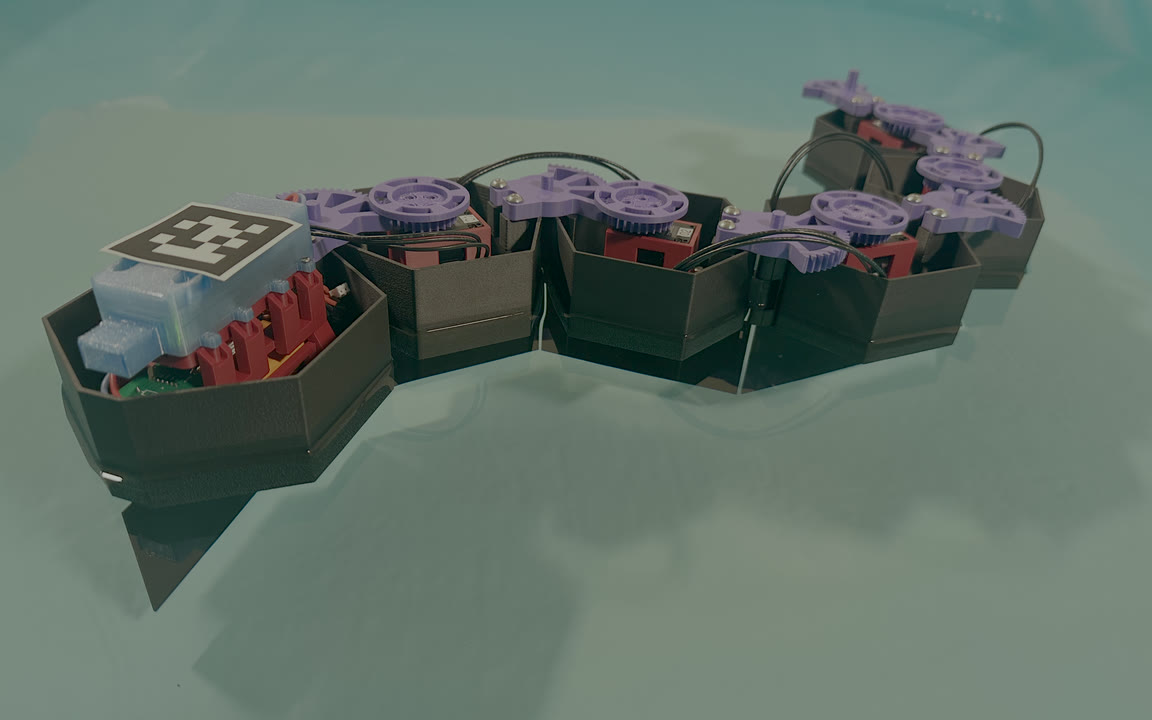
Giving our untethered, modular eel robot a sense of its own body and the surrounding flow, so that what it feels can be fed back into control and planning.
Fluid and robot dynamics posed as one least-action problem, giving a differentiable simulator whose swimming gaits and C-start escapes transfer to an untethered eel robot.
A modular multi-link swimmer that tunes joint stiffness online through sliding laminate flexures; trajectory-optimized stiffness patterns raise thrust by up to 89%.
A passive, segmented “dead-fish” robot that synchronizes with an oncoming vortex street to harvest flow energy and move upstream, with stiffness distributions found by gradient-based design.
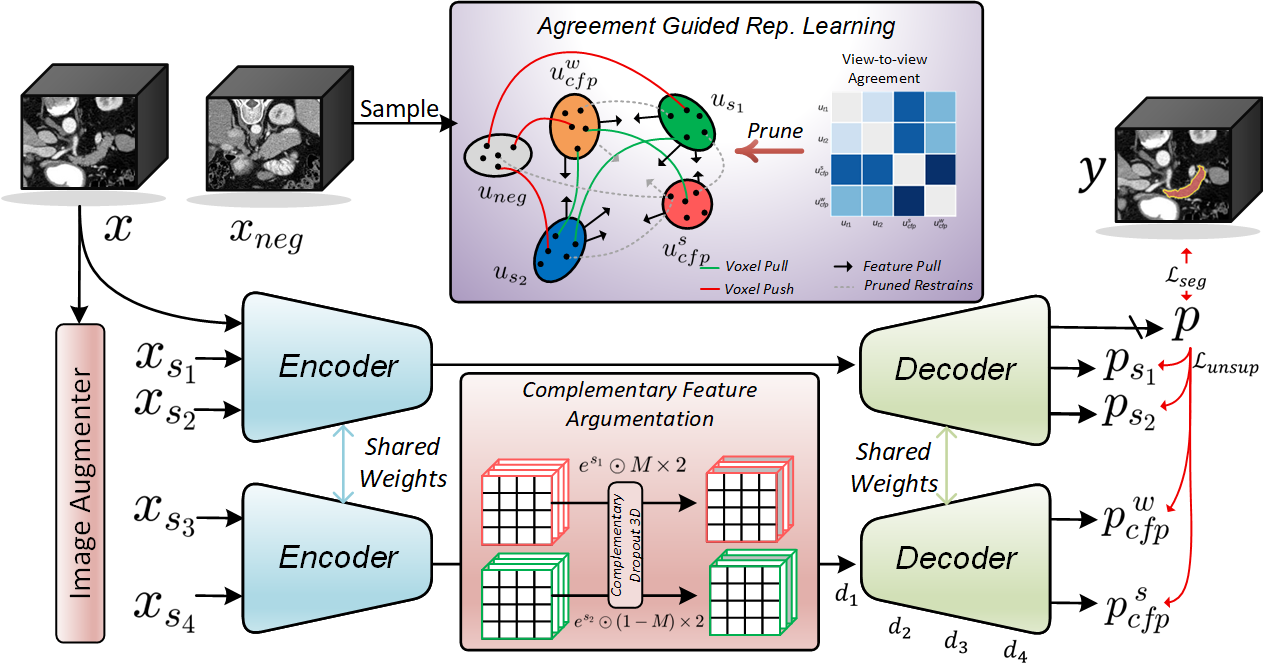
Agreement-guided representation learning that curbs pseudo-label noise when only a few annotated scans are available.